



How to Select Suitable Carbon Brush Material for Your Motor?
How to Select Suitable Carbon Brush Material for Your Motor?
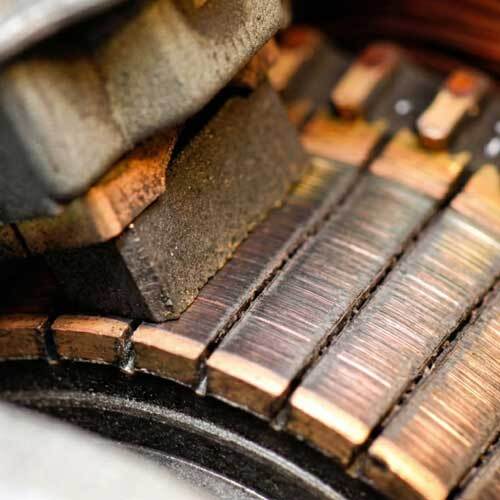
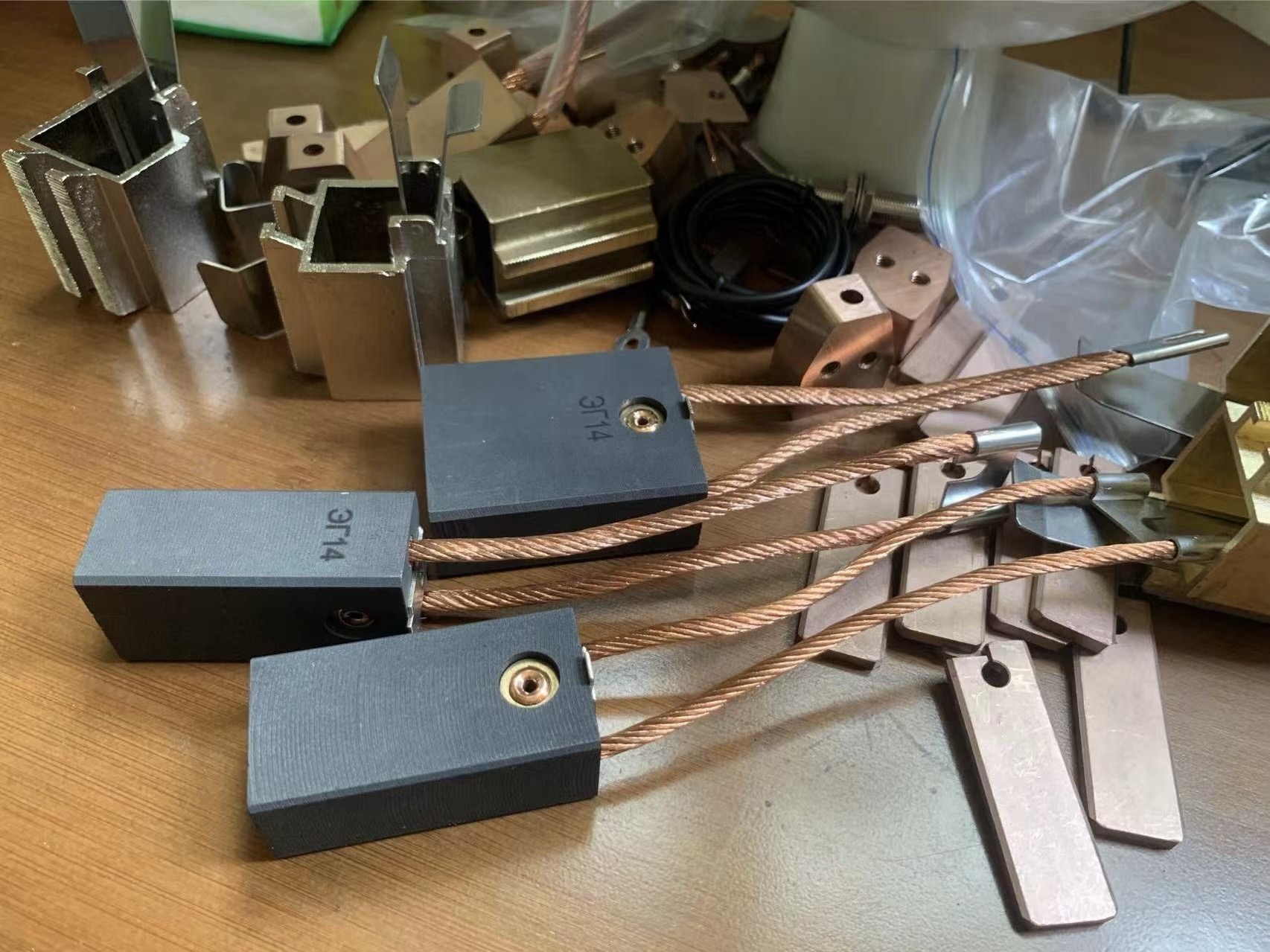
Selecting a suitable carbon brush material for a motor depends on matching the motor’s operating conditions, load characteristics, and commutation/conductivity requirements. You can follow these steps and key dimensions to make a decision:
1. Clarify the Core Operating Parameters of the Motor
This is the basis for selection. First, confirm the following information:
· Motor type: DC motors (requiring commutation), AC motors (slip ring conduction), series-excited motors, high-speed turbine generators, etc. Different types have vastly different requirements for the commutation capability and wear resistance of carbon brushes.
· Operating speed: High-speed motors (e.g., turbine generators, power tool motors) require carbon brushes with low friction and high temperature resistance; low-speed, heavy-duty motors (e.g., hoist motors) prioritize carbon brushes with high mechanical strength and stable conductivity.
· Load characteristics: Determine if it is continuous load (e.g., fan motors) or intermittent load (e.g., machine tool motors), light load or heavy load. Heavy-duty motors need carbon brushes with better conductivity and thermal conductivity to avoid commutator ablation due to overheating.
· Operating environment: Dry and clean environments, humid environments, dusty environments, or environments with corrosive gases will affect the selection of carbon brush weather resistance.
2. Match Motor Requirements by Carbon Brush Material Type
Based on the characteristics of different carbon brush materials, select the suitable scenarios accordingly:
| Carbon Brush Material Type | Core Characteristics | Suitable Motor Scenarios |
| Pure graphite carbon brush | Good lubricity, high temperature resistance, low friction coefficient, but average conductivity | High-speed, light-load AC slip ring motors, such as steam turbine generators and large fan motors |
| Metal-graphite carbon brush (mainly copper-graphite) | Excellent conductivity and thermal conductivity, high mechanical strength, good wear resistance | DC motors (e.g., hoist motors, traction motors), high-power AC motors, especially suitable for heavy-load and high-current working conditions |
| Silver-graphite carbon brush | Outstanding conductivity, low contact resistance, and low loss | Small precision motors, such as car window motors, motorcycle generators, and micro motors for instruments and meters |
| Resin-graphite carbon brush | High mechanical strength, strong wear resistance, and good commutation performance | High-speed series-excited motors, such as power tools (electric drills, angle grinders) and vacuum cleaner motors |
| Electrographitic carbon brush | Balanced comprehensive performance (lubricity, conductivity, wear resistance), small commutation spark | High-performance DC motors, high-speed turbine generators, suitable for equipment with high requirements for commutation stability |
3. Additional Matching Points to Note
· Match with commutator/slip ring material: Copper commutators are preferred to be paired with copper-graphite carbon brushes; cast iron slip rings can be matched with pure graphite carbon brushes to avoid excessive commutator wear caused by hard-on-hard friction.
· Focus on spark control: If the spark during commutation of a DC motor is too large, prioritize electrographitic or resin-graphite carbon brushes—these materials have better commutation performance and can reduce damage to the motor caused by sparks.
· Consider maintenance convenience: In dusty environments, choose metal-graphite carbon brushes that produce less wear debris as much as possible; for equipment requiring long-term maintenance-free operation, prioritize resin-graphite or electrographitic carbon brushes with strong wear resistance.
4. Verify with Small-Batch Trial
If you are unsure which material is the most suitable, you can first purchase small batches of carbon brushes with different materials for installation testing. Observe the three indicators: commutation spark size, carbon brush wear rate, and commutator surface finish, and finally determine the optimal solution.
Tags:
Related Posts